
Tra La
Every August I find my way back to Green Acres.
That's what we've always called my grandparents' little farm tucked into the hills of Bradford County, Pennsylvania. It isn't much by most people's standards. An old farmhouse. A weathered barn. Rolling fields giving way to woods. But if you ask me where my life really began, it wasn't in the hospital where I was born.
It was here. Long before I ever made wine. Long before I planted an orchard or thought about fermentation. Before Botanist & Barrel, before vineyards, before cider. It started with a little plastic bucket swinging from my hand as I followed my grandparents into the woods.
Earlier this year, my sister Kether and I lost our grandfather, John Pelissier. He was one hundred years old.
This is the first blueberry season without him.
I've been trying to understand why that has felt so much heavier than I expected. I think it's because blueberries have never really been about blueberries.
They're about Green Acres.
My grandparents, John and Emma, were both French immigrants. Owning farmland in France was a dream that never felt within reach. America gave them a chance they couldn't find back home. As soon as they were able, they bought a little farm in northeastern Pennsylvania.
I don't know if they ever imagined what that piece of land would become. To them it was the summer home. To my sister and me, it became something much bigger.
Every school break we'd make the trip north, and sometime in early August we'd gather up our buckets and disappear into the woods looking for wild blueberries.
I can still picture those buckets lined up by the back door. Green, pink, and blue. None of them matched. Some had handles made from old electrical wire. Others were tied together with pieces of yarn after the originals had broken years before. Nobody cared what they looked like. They held blueberries just fine.
We'd spread out across the woods, each convinced we'd find the best patch before anyone else. Early on, you could still hear where everyone was by the sound of the picking itself, the ping of the first berries landing in an empty bucket, carrying through the trees. Once the buckets filled up, the sound disappeared into itself, and berries landing on berries didn't carry the same way. That's when we started calling out instead. My grandmother would cup her hands and yell "yoohoo," and somewhere else in the woods, my grandfather would yell back a short "yo."
My favorite place was a clearing deep in the forest where the taller trees gave way to waist high blueberry bushes. More sunlight reached the ground there, and somehow the berries always seemed sweeter.
Getting there was part of the adventure. The forest floor was covered with thick carpets of moss that felt almost springy beneath your feet. Dry branches snapped with every few steps. The air smelled of warm pine, damp earth, and blueberries ripening in the August sun.
It's funny what survives in memory.
I couldn't tell you what I got for Christmas when I was ten, but I can still hear those branches breaking beneath my shoes. I can still see sunlight filtering through the pines onto that patch of blueberries. I can still picture my grandfather wandering through the bushes, humming Beethoven.
Everyone had their own way of picking.
My grandfather was, without question, the dirtiest picker of us all. By the time he came back, his bucket was as much leaves, twigs, and green berries as it was ripe fruit. My grandmother would sit with his harvest and sort through it one handful at a time, shaking her head as she pulled out everything that didn't belong.
"Tra la," she would say, and give him one of her little love slaps before going back to sorting.
He never seemed particularly bothered.
Accuracy wasn't really the point.
He also looked like the slowest picker. Not because he moved slowly, but because he ate nearly as many blueberries as he picked.
My grandmother approached food differently. She had an ability I've never seen in anyone else before or since. She could take the simplest ingredients and somehow make them extraordinary.
Everyone says their grandmother made the best pies. I know that. But I'm telling you, hers really were different. No recipe. No measuring cups. Just instinct. Every crust flaky. Every filling balanced perfectly.
We've all tried to recreate them.
None of us has.
Maybe that's because we keep trying to recreate the pie when what we really miss is the person who made it.
I had my own philosophy. I wasn't the cleanest picker, and I certainly wasn't the slowest. I was the fastest. These days my sister has taken that title.
But unlike everyone else, I never ate blueberries while I picked. Not one. I always waited until I was walking back to the house. Even then I'd only eat a few.
I wanted every berry I could get. Not because I planned on eating them immediately, but because I planned on freezing them.
Every year I'd fill bag after bag with wild blueberries and tuck them into the freezer. Some years they lasted until the next harvest. That never bothered me. There was something deeply comforting about opening the freezer in the middle of January and seeing those bags waiting there.
When I looked at them, the world somehow made a little more sense.
No matter what the year had brought, there was still a little piece of August waiting for me. A little piece of Green Acres.
I don't think I understood it then, but I wasn't preserving blueberries.
I was trying to preserve a place.
Of course, I couldn't have put words to that as a kid. I only knew that I liked seeing those bags lined up in the freezer. I liked knowing that whenever I needed it, there was still a little taste waiting for me.
I thought those berries could hold everything. The moss beneath my feet. The clearing in the woods. The buckets swinging from our hands. My grandfather wandering through the bushes and eating half of what he found. My grandmother sorting his dirty harvest and saying, "Tra la."
For most of my life, opening the freezer brought it all back.
This year it didn't bring back enough.
In my grandfather's final years, he could no longer make the trip to Green Acres himself. I found so much joy in picking berries for him and bringing them back.
It never felt like I was doing him a favor. It felt like I was returning something that had been given to me decades earlier.
He had once taken me into those woods and shown me, without turning it into a lesson, that fruit was worth searching for. That a season was worth noticing. That food tasted different when you knew where it grew and who had gathered it.
When he could no longer make that walk, I could carry a little piece of Green Acres back to him.
I think about those visits now and wonder whether I understood what they meant at the time. I probably assumed there would always be another harvest. Another container of berries to bring him. Another chance to sit together.
We rarely recognize a final time while we're living through it. It looks too much like all the times that came before.
That is what has made this blueberry season so hard.
Some things cannot be changed. The berries come home mixed with twigs, leaves, and green fruit. Bushes disappear. People grow old. The people we love eventually leave us.
You sort through what remains. You save what is worth saving. Then you give the person who brought you the mess a love slap and keep going.
Green Acres taught me how to pay attention long before I understood why attention mattered. There wasn't much cell service there then, and there still isn't now. When I was young, that didn't feel unusual. We didn't carry screens that constantly asked us to look away from wherever we were.
Today, the lack of service changes the way time moves there. You don't scroll because you can't. Breakfast is more than a meal. A walk into the woods takes half the day. Conversations reach their natural end because nothing interrupts them.
The quiet gives you room to notice what is ripe, where the sunlight reaches the ground, and which birds found the currants before you did. It gives you room to notice the people beside you.
The farmhouse could be replaced. The barn could be rebuilt. New blueberry bushes could be planted. What couldn't be replaced is the way Green Acres ties my family to the land, and to each other.
The place removes enough of the noise for those connections to take root.
I sometimes wonder how much of who I became was shaped simply by spending so many summers in a place that refused to let me be distracted.
The blueberries were only one part of that.
My grandfather loved red currants nearly as much, and he planted close to fifty bushes behind the old farmhouse. When they were ripe, they hung in bright red clusters, sharp and sour and almost too delicate to touch.
My claim to fame in the family was inventing the red currant pancake.
One year, the blueberries were almost nonexistent. I woke before breakfast, grabbed my little bucket, and headed outside to see what else was ready.
I can still picture my grandmother standing over the stove and watching me through the kitchen window. She was probably smiling to herself and wondering what kind of kooky little kid willingly woke up early to gather fruit before he had even eaten breakfast.
I came back with a bucket full of red currants.
They weren't an obvious choice for pancakes. Red currants are bright, sharp, and unapologetically sour. We tend to expect breakfast to be sweet, especially when pancakes and maple syrup are involved.
But when the currants burst inside the warm pancakes and met the syrup, the whole thing worked. The syrup softened their sharpness without erasing it. The currants made the syrup taste sweeter. Every bite depended on the tension between the two.
Sometimes we mixed blueberries and red currants together. That combination, in my mind, belongs only in that little kitchen at Green Acres.
The family has loved those pancakes ever since. They stayed with us because they were unexpected, and because they came from a morning when an almost empty blueberry crop forced us to notice what else the land was offering.
The currants also found their way into something my grandfather proudly called Château Green Acres.
It was simple. Red currants, vodka, and a healthy dose of sugar left to steep together. We made it for friends and family and poured it as a little digestif after dinner.
There was no formal tasting. Nobody discussed acidity, structure, or finish. Someone poured a little into small glasses, the conversation slowed down, and another story began.
When the bottle was empty, the vodka soaked currants were never wasted. My grandmother folded them into pies, and the smell that filled the kitchen was unlike anything else she baked. Warm pastry, tart fruit, sugar, and that little bit of alcohol all rising together from the oven.
None of us thought we were creating family traditions. We thought we were making pancakes, baking pies, and pouring a drink after dinner.
The traditions quietly took care of themselves.
That is the strange thing about memory. The moments that stay with us aren't always the ones anyone thought to photograph or write down. They are often the ordinary things we didn't realize were shaping us.
A bucket repaired with wire.
A grandmother watching through a kitchen window.
A bottle of currants, vodka, and sugar sitting on a shelf.
Those moments became the foundation for nearly everything I would eventually care about.
As my grandfather got older, he could no longer care for the currant bushes. My grandparents began spending more time at their home in Amherst County, Virginia, and a neighbor mowed the property in Pennsylvania.
Over the years, many of the bushes were damaged, choked up by the dead grass and eventually died.
For a long time, I assumed the currants would always be there. By the time their disappearance became impossible to ignore, only a handful remained along the driveway.
The birds had planted those.
That loss bothers me differently because it didn't happen all at once. There was no single day when fifty bushes became five. They disappeared slowly while life was happening somewhere else. Each year there were fewer, until one day my grandfather removed them all.
I wish I had noticed sooner.
For years, I believed preservation meant putting something away. Freeze the berries. Bottle the currants. Ferment the juice. Keep enough of the harvest that some part of the season will still be there when winter arrives.
The currant bushes taught me that memory alone won't tend a place for you.
The freezer can hold what was picked, but someone still has to care for the bush. Someone has to notice when the mower gets too close. Someone has to put a new plant into the ground before the last old one disappears.
These days, I'm that someone somewhere else too.
This season, I've been picking alone on the farm I've spent the last eleven years building with my own family. It was quiet, early, before anyone else had shown up. I dropped the first few berries into an empty bucket and heard that sound, the ping of fruit hitting plastic.
I hadn't heard it in years. Not really heard it. That was the sound that once told us where to find each other in the woods at Green Acres, before the buckets filled up and it went quiet for the day.
I kept picking. I also started crying, and let myself do both at once. When I couldn't hold it all in my head anymore, I pulled out my phone and started talking, one memory pulling the next one loose, trying to get it down before it went quiet too.
I can't bring my grandparents back. I can't recreate my grandmother's pies by following the steps closely enough. I can't ask the land to remain frozen in the happiest years of my childhood.
Tra la.
I can sort through what remains.
I can care for it.
I can plant something.
So this August, I'm going back to start the work to replant the red currants.
That choice feels different from putting another bag of fruit into the freezer. The freezer faces backward. Planting asks me to look ahead.
I want those bushes growing there again. I want my children to walk outside before breakfast with little buckets in their hands. I want them to taste a currant and wonder why anyone would put something so sour into a pancake. I want them to discover what happens when the syrup reaches it.
Maybe they'll make the pancakes exactly as we did. Maybe they'll add something none of us would have considered. Either way, the currants will have another chance to become part of their story.
I'll probably pour a little of the last Château Green Acres while I'm there.
I don't expect it to bring my grandfather back. But I know what the smell of those currants will do. For a moment, I'll see the table and the little glasses. My grandmother will be moving around the kitchen. My grandfather will be sitting nearby while someone tells a story we've all heard before.
Nobody will be in a hurry for it to end.
That is part of why Kether and I became winemakers.
Our grandparents never sat us down and taught us about farming, fermentation, or a sense of place. They simply lived in a way that connected food to land, season, and people. Every meal began with what was ready. The land had a voice in what ended up on the table.
I fell in love with the idea that food carries memory, and we often forget that beverages are food too. A bottle can hold a season. Opened years later, it can return the weather, the fruit, and the people who gathered around it.
I think I've been trying to do with wine what I first tried to do with those bags of blueberries. Capture enough of a time and place that someone can taste it later.
This year has reminded me that a bottle has limits too.
The work matters because the season ends. Not because I've found a way to stop it.
In early August, you probably won't be able to reach me. There's no cell service at Green Acres, for starters, but I won't be looking for it either.
I'll be walking into the woods with my kids, carrying a collection of mismatched buckets. We'll cross the moss and hear branches breaking beneath our feet. They'll race ahead looking and argue over who found the best patch. They'll probably eat more berries than they bring home.
I'll wait until the walk back.
For a few hours, there will only be the woods, the berries, the buckets, and us. I won't need to explain what the moment means. Green Acres has always done its best work without explaining itself.
Someday, my children may remember the moss. They may remember the sound of the branches or the strange buckets held together with wire and yarn. Maybe they'll remember that their father refused to eat a blueberry until the walk home.
They may remember planting currants where only a few scattered bushes remained.
There will still be five gallon bags of blueberries in my freezer at home. Most of them probably won't get eaten before the next harvest, and that's okay.
One winter day, I'll open the freezer and see them waiting. I'll reach into a bag and taste a clearing in the Pennsylvania woods, my grandfather humming the 9th, and my grandmother standing over a pie whose recipe none of us will ever recover.
Then I'll remember the currant bushes waiting to be planted and the children who will carry the buckets next.
The berries can't take me back.
But they can remind me where to go.
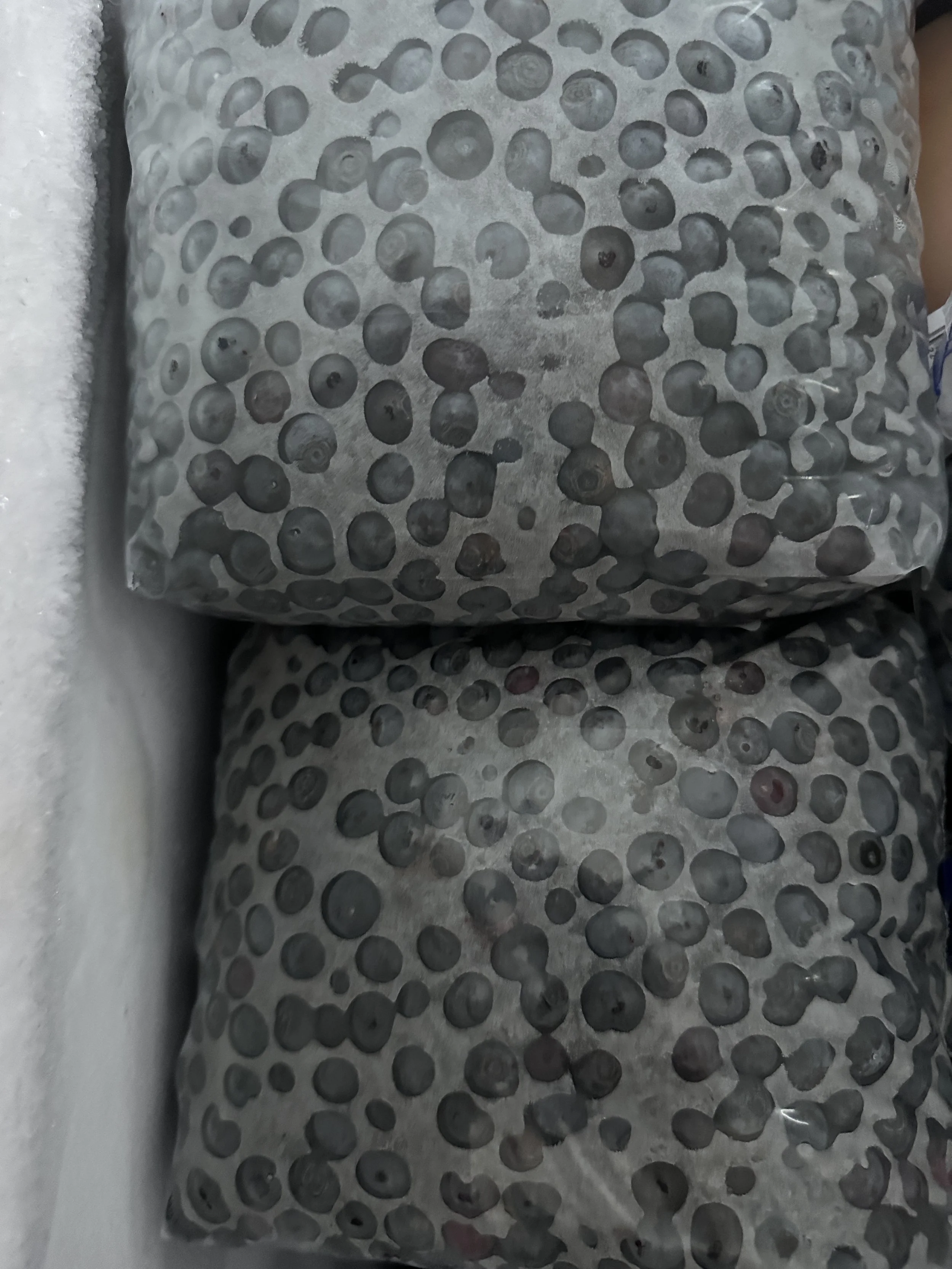
Frozen blueberries in my freezer today.
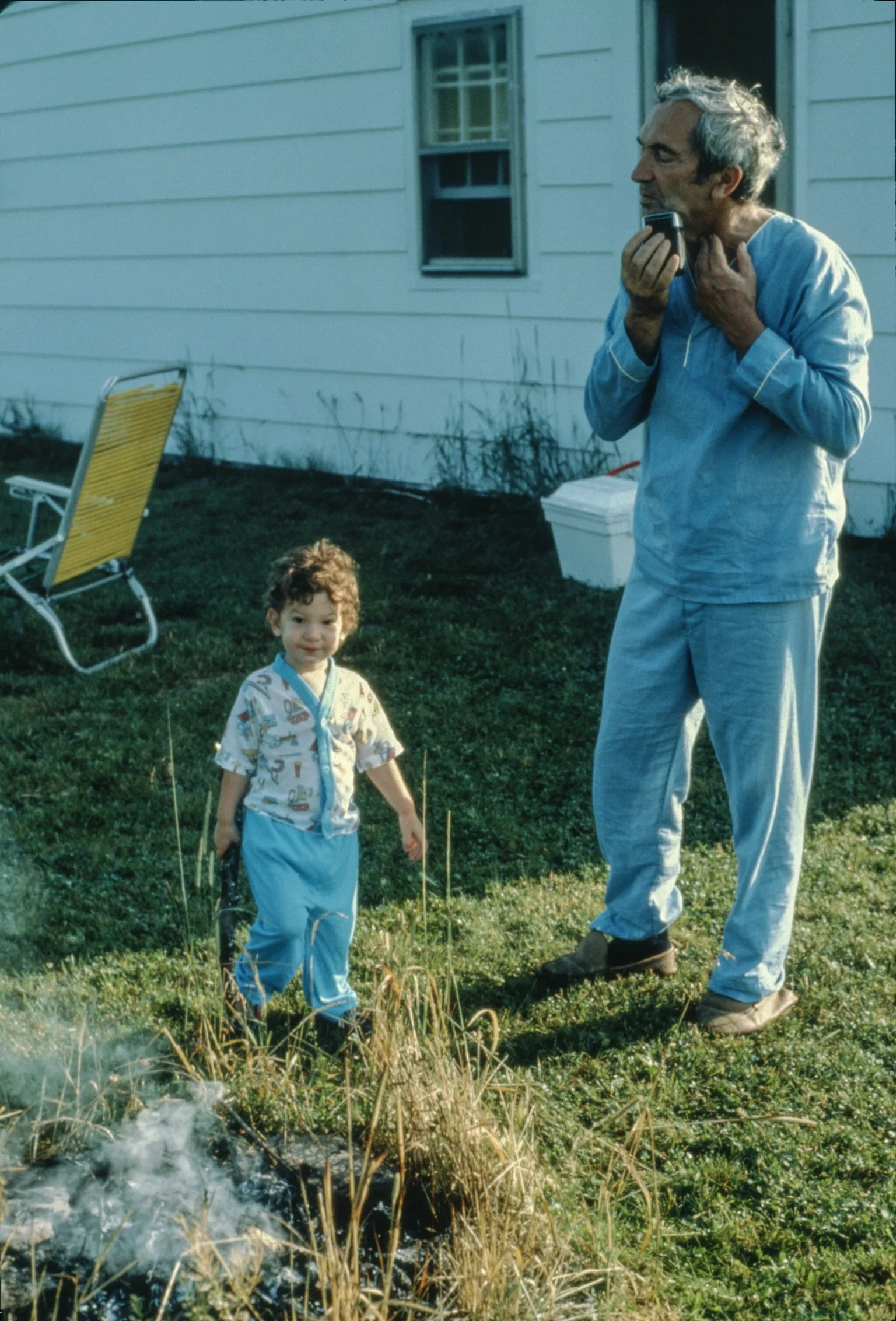
That’s me as a toddler “helping” to burn the paper trash as my grandfather shaves in the yard at Green Acres.
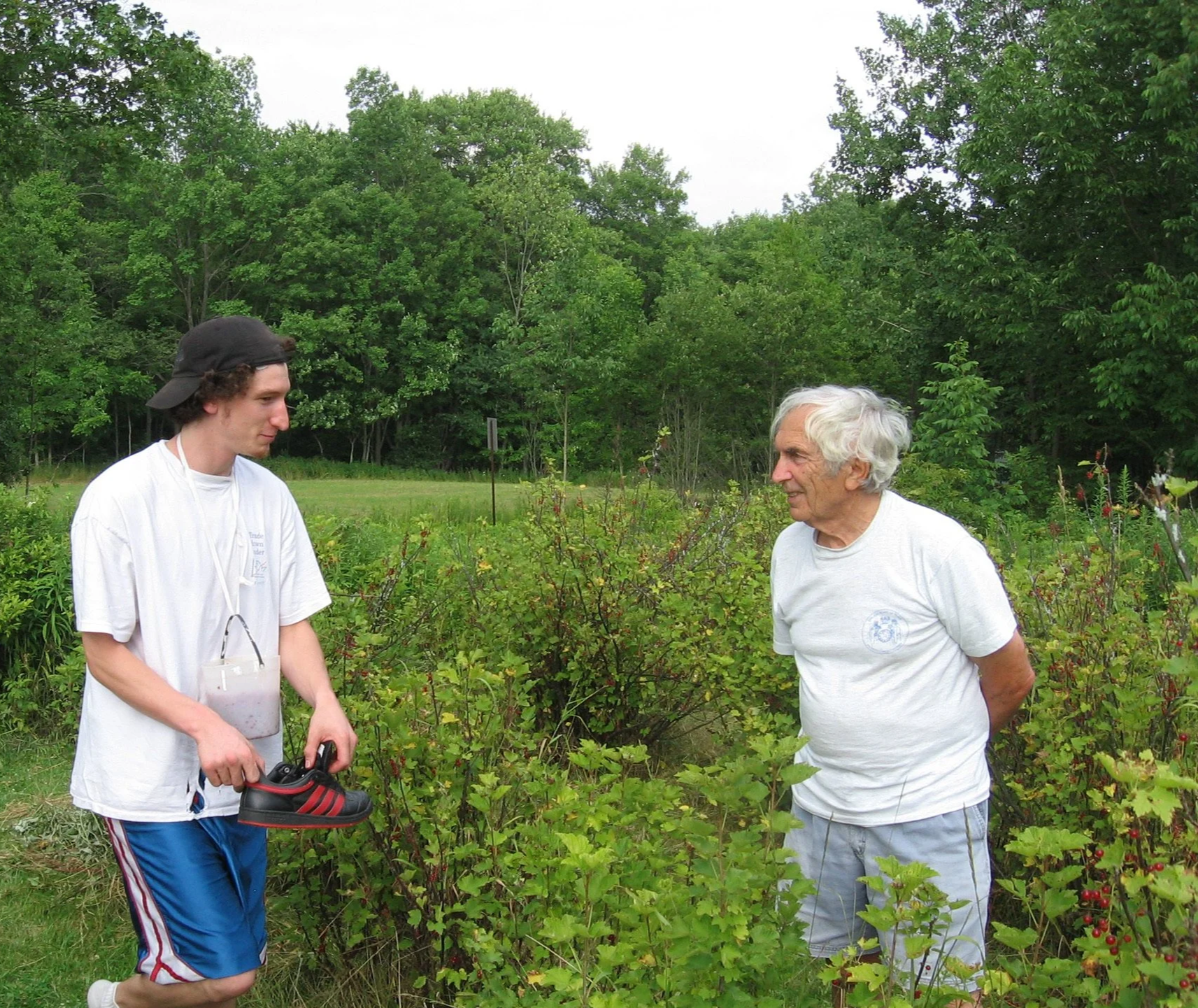
Shaking some red currants out of my shoe after picking as my grandfather comes to say hi.
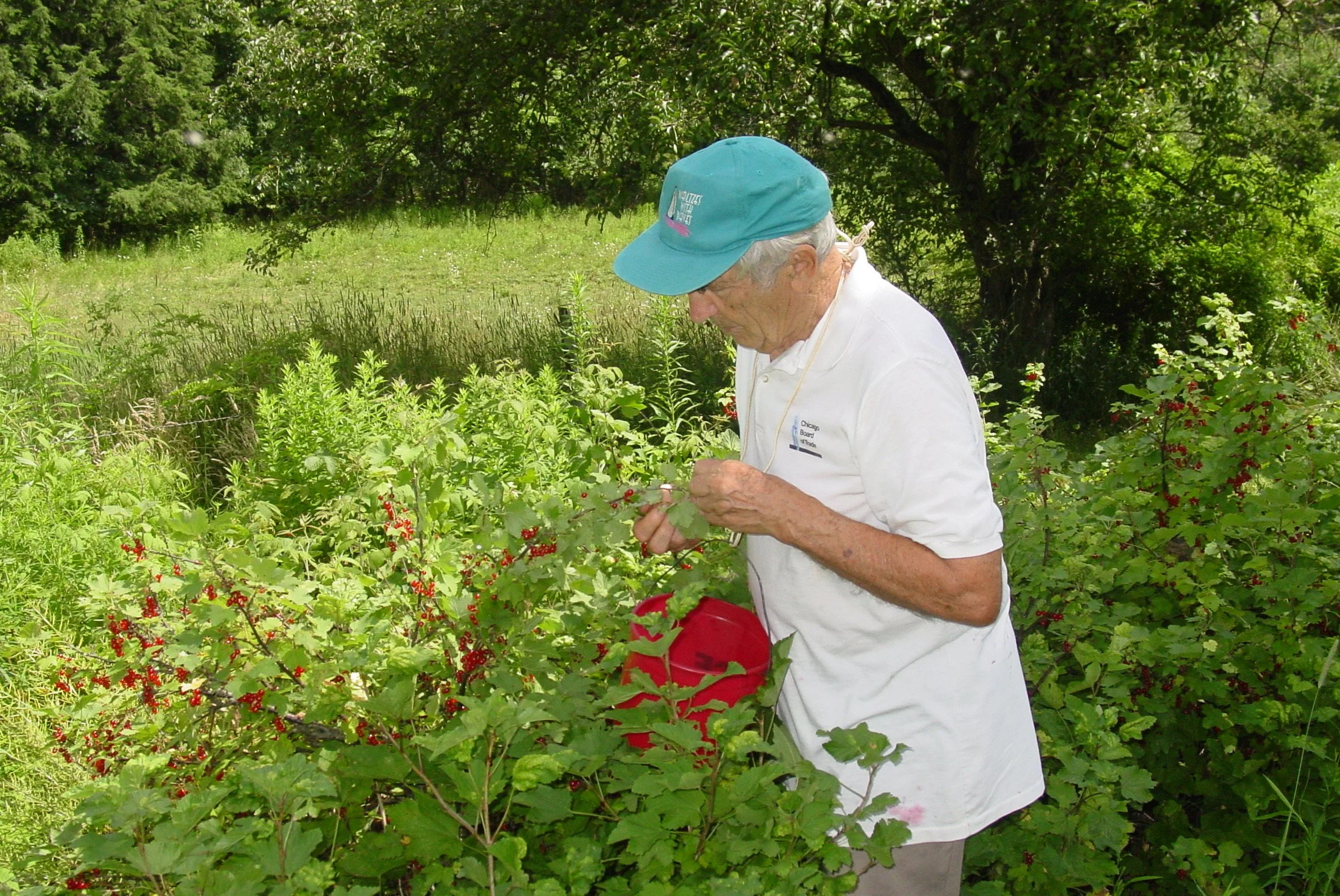
Pepe picking his prized red currants.
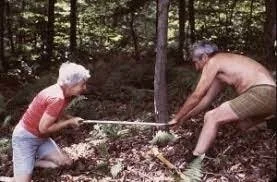
My grandparents cutting down a tree.
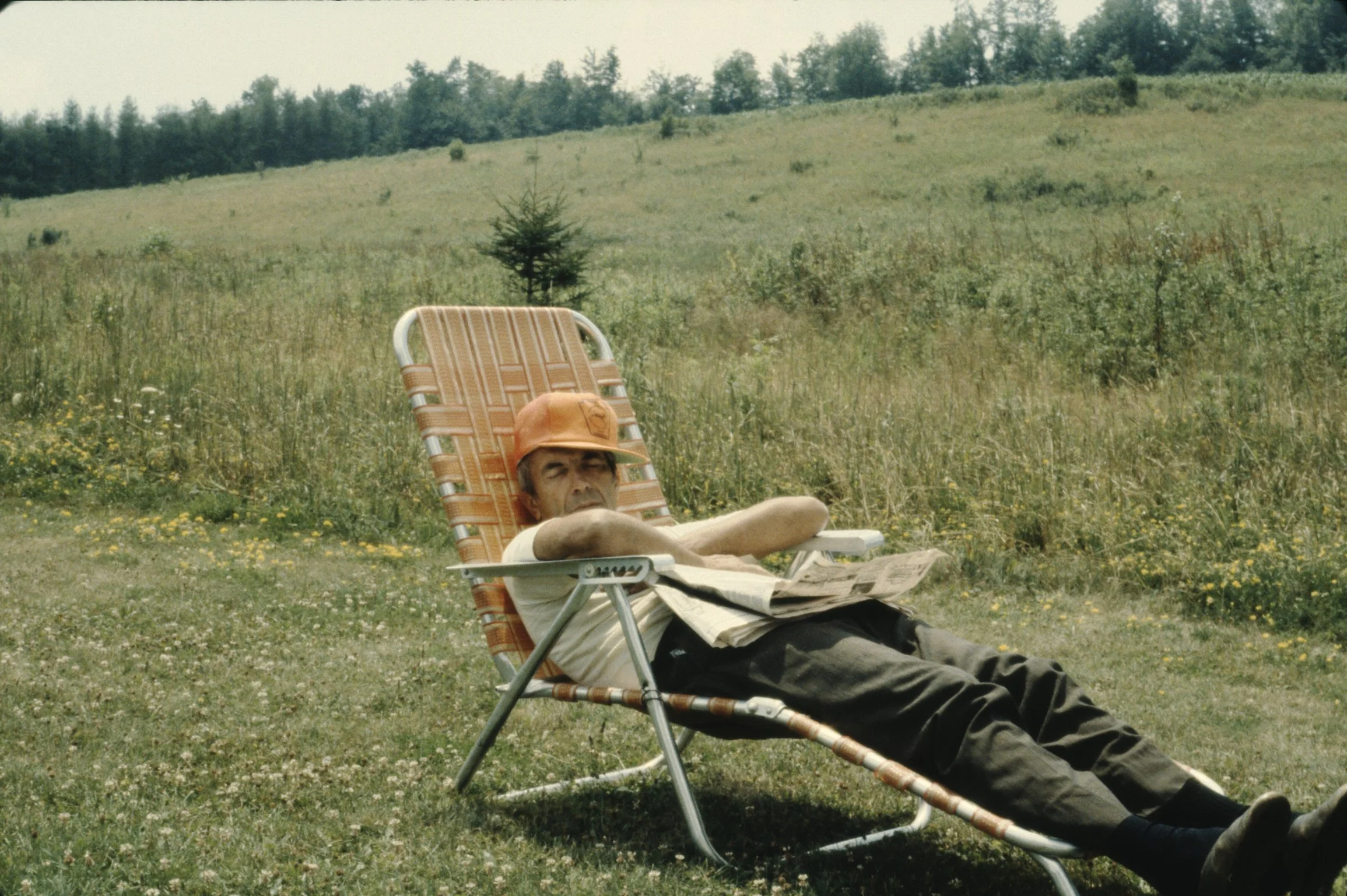
Pepe taking his daily afternoon nap.